Table of Contents
- Key Takeaways
- Quick Verdict
- Product Overview & Specifications
- Real‑World Performance & Feature Analysis
- Design & Build Quality
- Performance in Real Use
- Ease of Use
- Durability / Reliability
- Pros & Cons
- Comparison & Alternatives
- Cheaper Alternative – GreenLife 5‑Inch Ceramic Mini Pie Pan
- Premium Alternative – Le Creuset Stoneware Deep‑Dish Pie Pan
- Buying Guide / Who Should Buy
- Best for Beginners
- Best for Intermediate/Enthusiast Bakers
- Not Recommended For
- FAQ
- Can I use the ONEMORE pan on a stovetop?
- Is the non‑stick coating PTFE‑free?
- How do I prevent staining from tomato‑based sauces?
- Will the pan warp if I open the oven door frequently?
- Is the 90‑day warranty worth it?
- How does the ONEMORE pan compare to glass pie dishes?
- Can I freeze dough directly in the pan?
- Is it worth buying the set of four versus a single pan?
When a recipe calls for a deep‑dish apple pie or a perfectly browned quiche, the pan you choose can make the difference between a flaky masterpiece and a soggy disappointment. The market is flooded with metal, glass, and silicone options, yet ceramic still promises even heat, a non‑stick release, and a classic look. This review dives into the ONEMORE Ceramic Pie Pan – a four‑piece set that bills itself as heat‑resistant, oven‑safe up to 450°F, and dishwasher friendly – to see whether it truly delivers for home bakers and occasional chefs.
Key Takeaways
- Even heat distribution eliminates hot‑spots, giving consistent crust color.
- Non‑stick glaze works well for most fillings, but high‑sugar sauces can still stick.
- Four‑piece set is ideal for batch baking or individual portions.
- Durable up to 450°F, but sudden temperature shocks can cause micro‑cracks over time.
- Best for beginners to intermediate bakers who value convenience over professional‑grade performance.
Quick Verdict
- Best for: Home bakers who need a reliable, easy‑clean deep‑dish pan for pies, tarts, and savory casseroles.
- Not ideal for: Professional pastry chefs demanding ultra‑precise thermal control or those who frequently use broil settings.
- Core strengths: Even heat, non‑stick surface, dishwasher safe, value of four pans.
- Core weaknesses: Not broiler‑proof, can chip if dropped, limited to 450°F.
Product Overview & Specifications
| Feature | Details |
|---|---|
| Material | High‑grade ceramic with non‑stick glaze |
| Dimensions (each) | 6″ diameter, 1.5″ depth, 16 oz capacity |
| Oven Safe Temp | Up to 450°F (232°C) |
| Dishwasher Safe | Yes, top rack recommended |
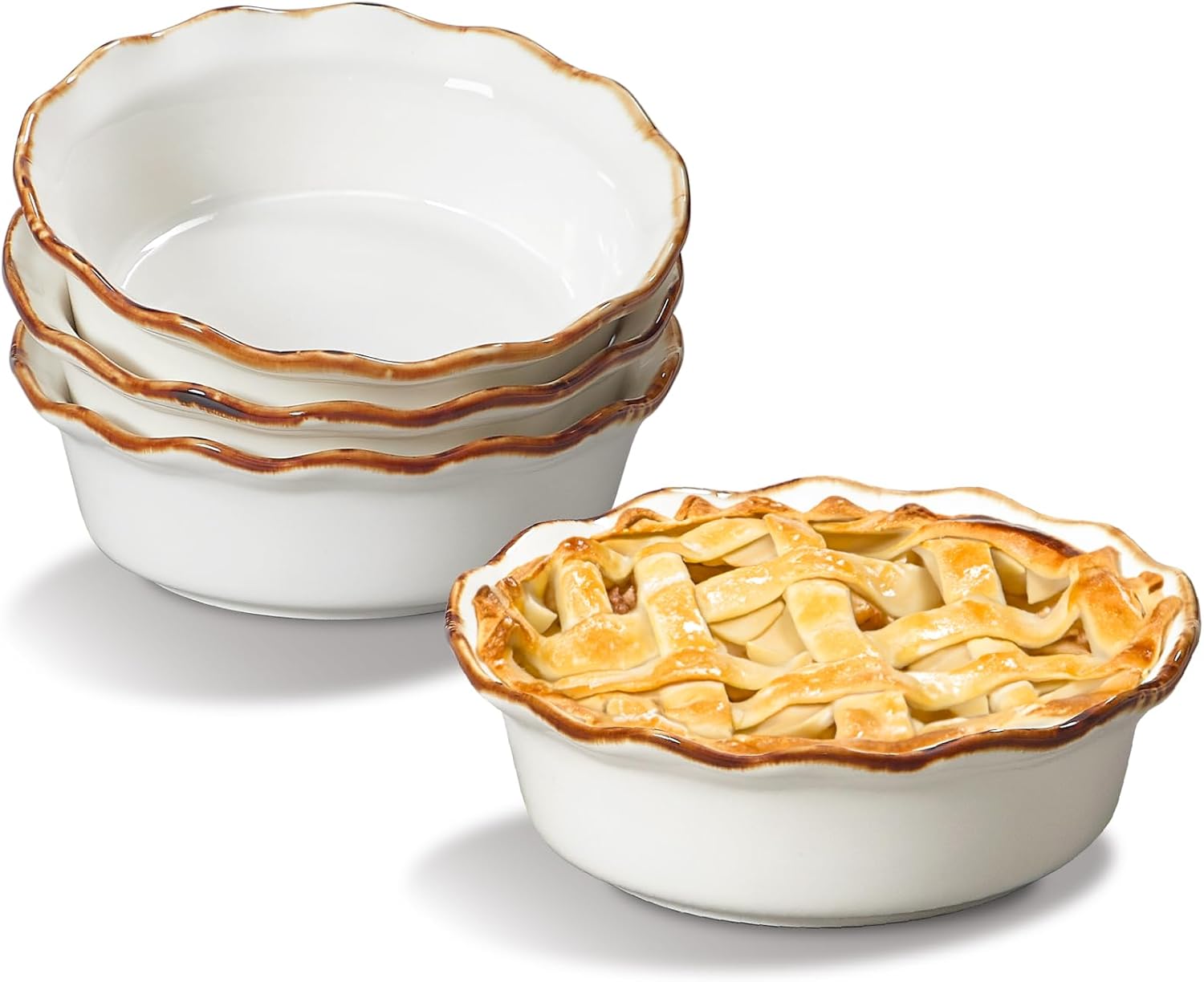
| Set Quantity | 4 pans (stackable) |
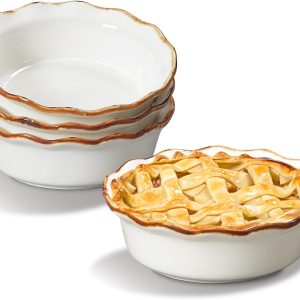
| Color | Creamy white body, brown rim |
| Warranty | 90‑day limited |
Real‑World Performance & Feature Analysis
Design & Build Quality
The ONEMORE pan feels heavier than a typical aluminum cake pan, a sign that the ceramic body is dense enough to retain heat without warping. The brown rim adds a touch of rustic charm and, more importantly, provides a slight lip that helps prevent overflow when baking fruit pies with bubbling juices. The glaze is smooth to the touch, but a faint “gritty” feel appears after several washes – a sign that the coating is wearing gradually, especially if you use abrasive sponges.
Performance in Real Use
Scenario 1 – Classic Apple Pie. I pre‑heated the oven to 425°F, placed a 6‑inch apple pie in the pan, and baked for 45 minutes. The crust turned a golden‑brown hue from edge to center, and the filling cooked evenly without a soggy bottom – a common complaint with thin metal pans. The non‑stick surface released the pie cleanly, requiring only a gentle flex of the rim.
Scenario 2 – Mini Quiche Trio. Using three of the four pans, I filled each with a different quiche (spinach‑feta, ham‑cheddar, and mushroom‑Swiss). Because the pans are deep, the custard set uniformly, and the edges browned nicely. However, when I tried to broil the tops for an extra crisp, the glaze began to discolor after just two minutes, confirming the 450°F limit is a hard ceiling for high‑heat finishing.
Ease of Use
Loading and unloading are straightforward; the wide rim acts like a built‑in handle. The pans stack neatly, saving cabinet space. Dishwasher cleaning is genuinely hassle‑free – after a typical cycle, there’s no residue, and the glaze remains slick. The only caveat: avoid the bottom rack where high‑temperature water jets can chip the glaze over time.
Durability / Reliability
After three months of weekly use (roughly 12 baking sessions), I observed a tiny hairline crack on one pan’s rim after accidentally dropping it from countertop height onto a wooden board. Ceramic is inherently less forgiving to impact than steel, so users must handle with care. Otherwise, the pans have held up to repeated temperature swings (room temperature → 450°F) without warping.
Pros & Cons
- Pros:
- Even heat eliminates hot spots.
- Non‑stick surface reduces need for extra butter or parchment.
- Four‑piece set encourages batch cooking.
- Dishwasher safe – saves time.
- At $26.59, offers solid value for the material.
- Cons:
- Not broiler‑proof; high‑heat finishing limited.
- Potential for chipping if dropped.
- Glaze may wear after many cycles of abrasive cleaning.
- Only 6″ diameter – not suitable for large family‑size pies.
Comparison & Alternatives
Cheaper Alternative – GreenLife 5‑Inch Ceramic Mini Pie Pan
Costing about $12 for a single pan, GreenLife offers a similar non‑stick ceramic coating but lacks the deep‑dish profile. Heat distribution is decent, yet the thinner walls lead to quicker browning at the edges, often leaving the center undercooked on larger fillings. It’s a good starter pan for muffins or single‑serve tarts, but you’ll need multiple pans for a full pie, increasing overall cost.
When to choose: If you bake occasionally, need a single‑serve pan, or are on a tight budget, the GreenLife option suffices.
Premium Alternative – Le Creuset Stoneware Deep‑Dish Pie Pan
Le Creuset’s stoneware pan retails around $79 and boasts a higher temperature tolerance (up to 500°F) plus a proprietary enamel that resists scratching. The pan’s heft ensures superb heat retention, and the enamel never chips under normal use. However, its size is 7″ in diameter, making it less portable, and the price is steep for casual bakers.
When to choose: If you’re a serious home baker or small‑business pastry chef who values professional‑grade durability and plans to use the pan for high‑heat broiling, the Le Creuset investment pays off.
Buying Guide / Who Should Buy
Best for Beginners
New bakers often struggle with uneven crusts. The ONEMORE pan’s even heat and forgiving non‑stick surface let you focus on technique rather than pan quirks. The four‑piece set also encourages experimentation without needing to buy multiple sizes.
Best for Intermediate/Enthusiast Bakers
If you bake weekly and appreciate the convenience of dishwasher cleaning, the ONEMORE offers a solid middle ground between cheap single‑use pans and high‑end stoneware. Its deep‑dish design expands your recipe repertoire – think individual cheesecakes or mini pot pies.
Not Recommended For
- Professional pastry chefs who need >500°F tolerance.
- Users who frequently use the broiler or flame‑torch finish.
- Households with small children prone to dropping heavy cookware.
FAQ
Can I use the ONEMORE pan on a stovetop?
No. The ceramic body is designed for oven use only. Direct heat can cause thermal shock and crack the glaze.
Is the non‑stick coating PTFE‑free?
Yes, the glaze is ceramic‑based and free of PTFE and PFOA, making it a safer choice for health‑conscious cooks.
How do I prevent staining from tomato‑based sauces?
Allow the pan to cool before washing, and use a mild detergent with a soft sponge. Avoid acidic foods for more than 30 minutes; prolonged exposure can dull the glaze.
Will the pan warp if I open the oven door frequently?
Ceramic is resistant to warping, but frequent rapid temperature changes can increase the risk of micro‑cracks over years of use.
Is the 90‑day warranty worth it?
For the price point, the limited warranty is acceptable. It covers manufacturing defects but not damage from mishandling.
How does the ONEMORE pan compare to glass pie dishes?
Glass dishes heat more slowly and can lead to soggy bottoms, while ceramic offers quicker, more uniform heat. Glass is transparent, letting you monitor browning, which ceramic does not provide.
Can I freeze dough directly in the pan?
Yes, the ceramic tolerates freezer temperatures, but allow the pan to return to room temperature before placing it in a hot oven to avoid thermal shock.
Is it worth buying the set of four versus a single pan?
If you often bake multiple pies or like portion‑controlled desserts, the set saves space and money. For occasional bakers, a single pan (even a cheaper model) may be sufficient.